

As we near the close of 2024, it’s time to reflect on a year of significant global developments and elections that shaped the political and economic landscape. Nearly half the world’s voters headed to the polls, setting the stage for a transformative 2025. Here, we explore key trends and their potential impacts.
Global Unrest and Its Ripple Effects
The ongoing conflict between Russia and Ukraine, coupled with escalated tensions in the Middle East, has created widespread uncertainty. These geopolitical challenges could disrupt supply chains, drive protectionist policies, and prolong inflationary pressures, leading to persistently high interest rates. However, history shows that even intense unrest can give way to uneasy peace.
The Great Unknown: Political Shifts
Predicting election outcomes has become increasingly difficult due to the complexities of modern politics. This year saw surprises across the globe:
- UK: Labour overturned the Conservative majority, though the extent of the victory was unexpected.
- India: The BJP retained its position but lost its absolute majority, while the INC made notable gains.
- France: A snap election resulted in a hung parliament, with another vote expected in 2025.
- South Africa: For the first time since Apartheid, the ANC will govern in coalition after losing its majority.
- US: Donald Trump secured a surprising landslide victory, raising questions about the global economic implications of “Trump 2.0.”
The Autumn Budget: What It Means for You
The UK Autumn Budget brought significant changes to inheritance tax, capital gains tax, and investment solutions. While some measures are under consultation, others take effect immediately.
Despite challenges, pensions remain a cornerstone of financial planning. Here’s why:
- Tax benefits: Pension contributions enjoy tax relief and grow in a tax-free environment.
- Estate planning alignment: Regularly review your will and pension nominations to avoid unintended consequences.
- Older pensions: Some plans lack beneficiary drawdown options, potentially incurring higher tax for heirs.
We’re monitoring these changes closely to ensure that your financial plans adapt effectively.
Trump 2.0: Market Implications
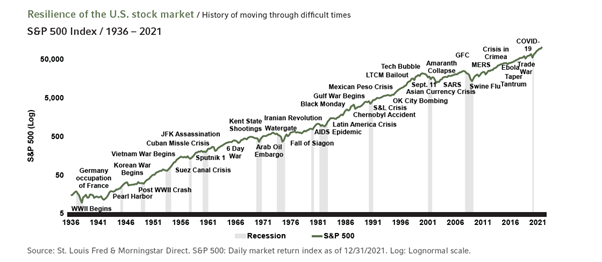
Markets responded positively to Donald Trump’s return to the White House. However, long-term investment returns are driven more by global economic cycles than political outcomes. The evidence remains clear:
- Historical trends show that markets recover from short-term shocks.
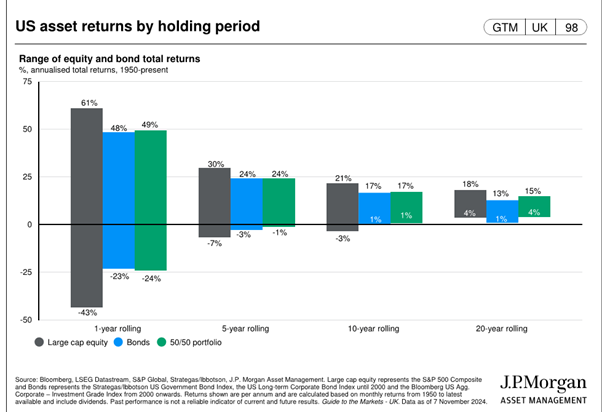
- Diversification and long-term investing are key.
The chart below highlights how balanced portfolios (e.g., 50% equities and 50% bonds) can help smooth out returns over time.
Key Considerations for 2025
While some events remain unpredictable, here are the trends we’re tracking:
- UK Economic Growth: Assessing the wider impact of the Autumn Budget.
- US Policies: Evaluating global market implications of “America First.”
- Global Cooperation: Monitoring responses to unrest in Eastern Europe and the Middle East.
- Trade Dynamics: Understanding the effects of a 2% contraction in global trade.
- Artificial Intelligence: Ensuring AI delivers positive outcomes.
- Climate Change: Addressing the long-term impacts as temperatures breach critical thresholds.
In Summary
Your financial goals remain our priority. While we cannot control markets, we can ensure your strategies align with your objectives and adapt to tax changes. By staying proactive and diversified, we help secure your financial future. Contact us if you would like to discuss anything further.
General disclaimer: We sourced the data from external sources. While we aim for maximum accuracy, we are not responsible for the data they provide. The introduction is written from the author’s perspective and reflects their views. This may not represent those of Manning Gee Investments. Anyone considering a product or service based on this blog should seek advice or conduct their research before deciding. The author is not liable for decisions made based on this blog. Investments can go down and up. The return at the end of the investment period is not guaranteed; you may get back less than you originally invested.